
The Amazon Marketplace Dilemma
By James Thomson and Joseph Hansen
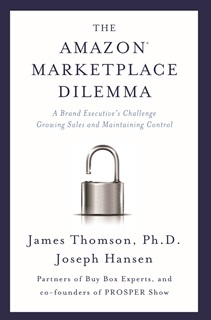
The Amazon Marketplace Dilemma was written for brand executives confronting a reality that was becoming increasingly difficult to ignore:
A brand may not decide whether its products appear on Amazon.
Once inventory enters an open distribution system, products can reach marketplaces through distributors, retailers, resellers, liquidation and other channels.
The strategic question therefore becomes less about whether Amazon exists in the company’s channel architecture and more about how deliberately the company chooses to govern that presence.
The Core Dilemma
The book framed the principal decision as:
Sell TO Amazon
or
Sell ON Amazon
Selling to Amazon and selling through Amazon’s marketplace can create very different operating responsibilities, economics and levels of control.
The decision can affect:
- inventory ownership
- pricing
- fulfillment
- marketplace content
- advertising
- seller relationships
- operational workload
- customer experience
- channel conflict
- profitability
There is no universally correct choice.
The correct structure depends on the company’s objectives, economics, capabilities and broader channel strategy.
A Lesson That Has Held Up
In a Forbes article discussing the ideas behind the book, I wrote that brands should generally assume that the products of a popular brand will eventually appear for sale on Amazon, whether the company wants them there or not.
That remains an important governance principle.
The practical question for management is therefore not:
Can we keep Amazon from becoming relevant?
It is:
How do we govern the economics and risks created when Amazon becomes relevant?
That distinction has become increasingly important as marketplaces have grown into material portions of many consumer-company investment theses.
From Marketplace Strategy to Board Governance
The original book focused primarily on the decisions facing brand executives.
I would frame several of those decisions differently for a board today.
Instead of asking only:
Should the company sell to Amazon or on Amazon?
I would also ask:
- What contribution does each model produce?
- What working capital does each require?
- How does the choice affect platform concentration?
- Who controls the marketplace accounts and data?
- What happens to the rest of the channel architecture?
- How transferable is the operating model to a future owner?
Those questions turn marketplace strategy into enterprise governance.
Amazon / Publisher Links
Google Books bibliographic record
Selected Interviews and Coverage
Practical Ecommerce: “Former Amazon Exec on Maintaining Brand Control”
In this 2018 interview, James Thomson discusses his experience leading Amazon Services, the realities brands encounter on Amazon, and the strategic issues explored in The Amazon Marketplace Dilemma.
Forbes: “The Amazon Marketplace Dilemma: Should Brands Sell To Amazon Or On Amazon?”
James Thomson explains the central strategic question behind the book and why brands cannot assume that staying away from Amazon will keep their products off the marketplace. The article also outlines several operating disciplines required to manage the channel effectively.
Forbes: “5 Things Amazon Isn’t Telling You About Selling On Their Site”
This article draws on James Thomson’s experience and the book to examine some of the less obvious challenges companies encounter when selling through Amazon.
Related Board Resources
The Agentic Commerce Brief
What changed in agentic commerce, and what it means for brands.
A concise weekly brief for brand executives navigating the shift from human-led shopping to agent-mediated commerce. Follow the developments that matter, the implications for brand control and governance, and the questions senior teams should be asking now.
Read The Agentic Commerce Brief on SubstackIf the signup form does not load, subscribe directly on Substack.